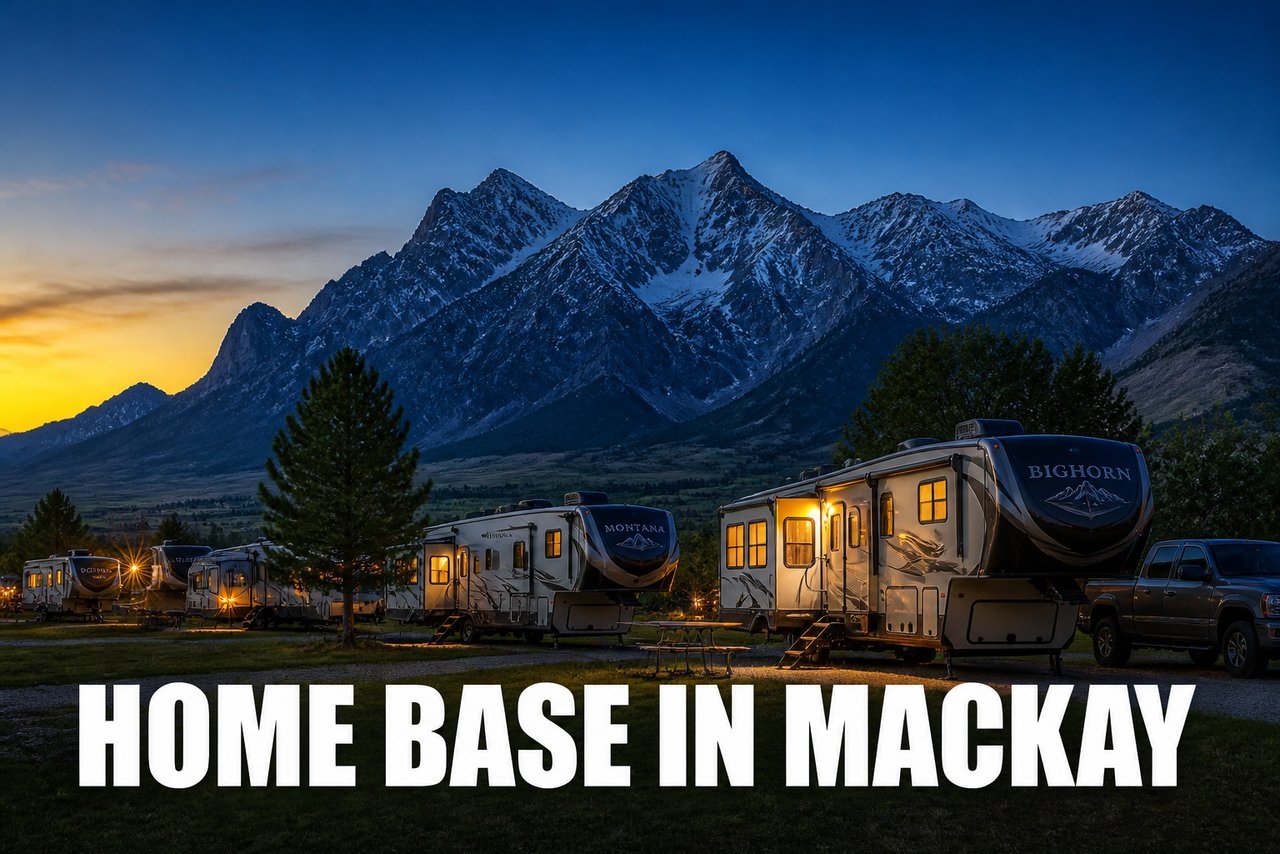
Moose Crossing: Home Base in the Lost River Valley
North out of Craters of the Moon country, Highway 93 climbs into a valley that deserves its name and then some: the Big Lost. The river wanders in from the mountains and, well, gets lost - there is no outlet to the sea, just acres of high desert and one of the most dramatic mountain walls in the state, the Lost River Range, standing guard over the west side. In the middle of it all sits the little town of Mackay, and on the edge of town sits home base: Moose Crossing RV Park.
A Park That Earns Its Name
Moose Crossing is a friendly, well-kept park with around thirty full-hookup sites - both 30- and 50-amp service - room for rigs up to forty feet, and a couple of cabins for the grandkids who do not yet appreciate the fifth wheel lifestyle. But the review-card facts are the least of it. What makes the place special is the setting: the park sits in the broad green of the Lost River Valley with trails starting practically from the office door, and the panorama from any site is a twelve-thousand-foot wall of mountains. On our morning walks we kept stopping for the light on the ridge. Neighbors tell us the moose in the name is not just marketing - the river bottoms nearby are honest moose country, and the locals have stories.
Mackay: The Town the Mountains Built
Mackay itself is a treat. Settled in 1880 and named for a mine promoter and railroad man of the era, the town grew up around the copper mines of the White Knob Mountains across the valley. For nearly half a century the mines and the smelters and the aerial tramways worked the mountain slopes, and Mackay served them all: the trade stores, the opera house, the hotel, the railroad that connected this remote valley to the world. Today it is a quiet ranching and recreation town of a few hundred people, with a main street that photographs beautifully and a pace that resets your clock.
Base-camping at Moose Crossing, we covered the whole valley in day trips: the mine hill tour up the mountain (more on that in its own post), the museum downtown, the earthquake country to the north, and the lava fields to the south. The park is genuinely central to everything we came to see in central Idaho.
The Practical Stuff
For the RV crowd: hookups are solid, the sites are level-ish and generous, the water is good, and the night quiet is absolute. The town of Mackay is minutes away for groceries, fuel, and a proper hamburger at the Pahsimeroi-valley institutions downtown - and if you time it right, the annual saddle club rodeo and the valley's summer events make the campground buzz. Resupply is workable; for big-box shopping, Twin Falls and Idaho Falls are each a couple of hours out, so arrive stocked.
Two more things you should know. First, the stars: with no town of any size for fifty miles in any direction, the night sky over the park is a planetarium show. Second, the cool: at nearly 6,000 feet in a mountain valley, August evenings here are sweatshirt weather, and sleeping with the windows open is the whole point.
Why This Stop Works
Some campgrounds are destinations; most are parking. Moose Crossing is the best kind of third thing - a comfortable base that quietly puts one of the most beautiful and least crowded valleys in the American West outside your door. The mountains got called the Lost River Range by folks who thought the country was empty. Camp here for a week and you will wonder what they were looking at.