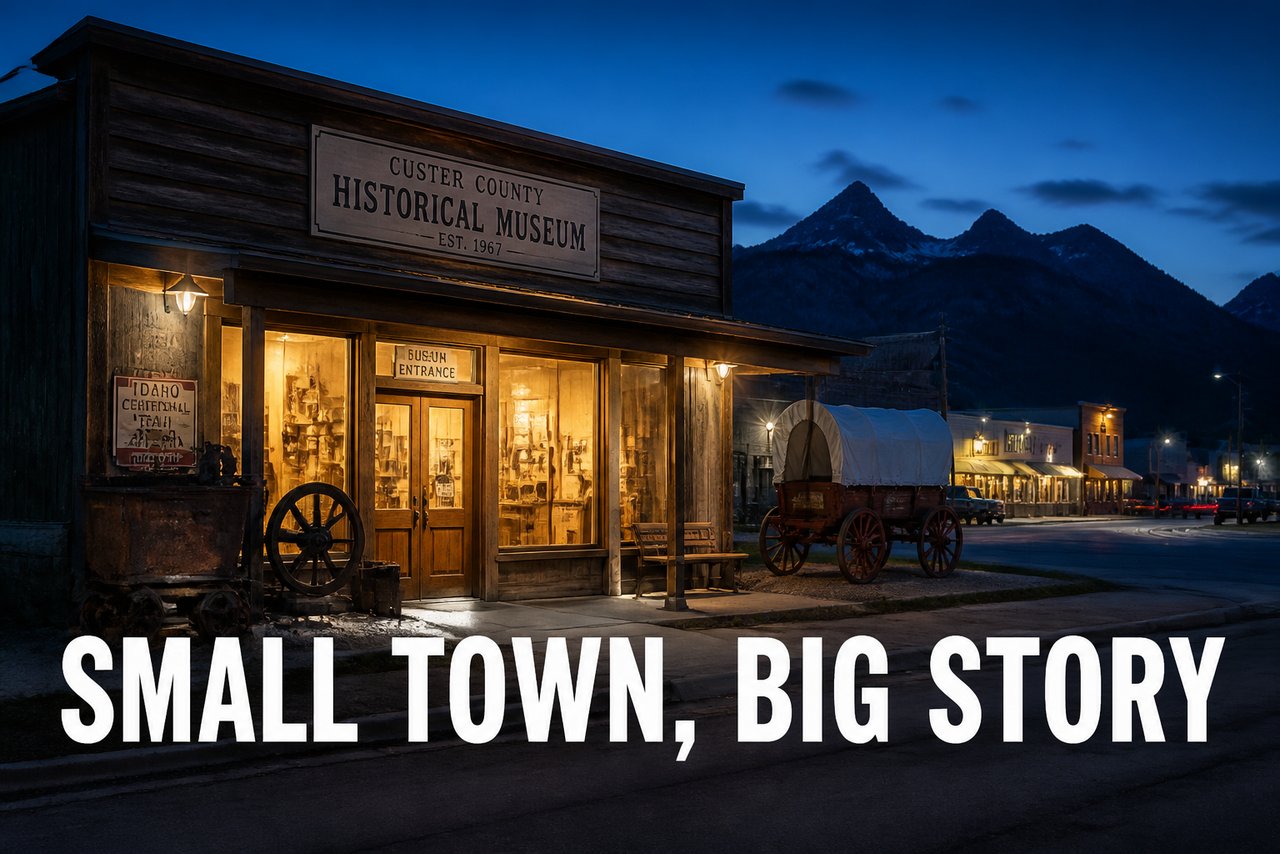
The Mackay Museum: Small Town, Big Story
Small-town museums are the best-kept secret in American travel, and the Custer County Historical Museum in Mackay is a textbook case. It occupies a handsome old building right on the main street, and inside is the whole story of this remarkable valley - the mines, the ranches, the railroad, the earthquake, and the people who made a life at the foot of the biggest mountains in Idaho.
What Is In There
The collection covers the valley floor to the mountaintop. There is a strong mining exhibit - ore samples, assay equipment, photographs of the White Knob operations and the tramway in its working years - alongside the ranching side of the story: brands, saddles, and the household goods of families who ranched the Big Lost for generations. The railroad room remembers the branch line that served Mackay for over half a century. And a standout section remembers October 28, 1983, when the Borah Peak earthquake rearranged the valley's chimneys and its sense of safety in about thirty seconds.
What small museums do better than big ones is people. The volunteer docents here are valley locals - the kind who can tell you which building downtown survived the quake, which families ranched which benches, and where the school basketball trophy from 1958 sits. Budget an unhurried hour and ask questions; the answers are the real exhibit.
The Main Street Context
The museum is a perfect anchor for a Mackay walking break. The town's main street is one of the best-preserved in rural Idaho - the century-old commercial blocks, the old bank building, the saloon with the cool stone interior, and the inn that has hosted hunters, miners, and road-trippers since the mines were running. Photograph the water tower, get a hamburger, and let the valley set your pace for the rest of the day.
For us the museum did what the best local museums do: it turned scenery into story. The Lost River Range had been a wall of beauty since we pulled into the valley - after an hour of the county's photographs and artifacts, it became a wall of characters. That is worth the stop all by itself.