The Headhouse on the Mountain: Mackay's Tramway Legacy
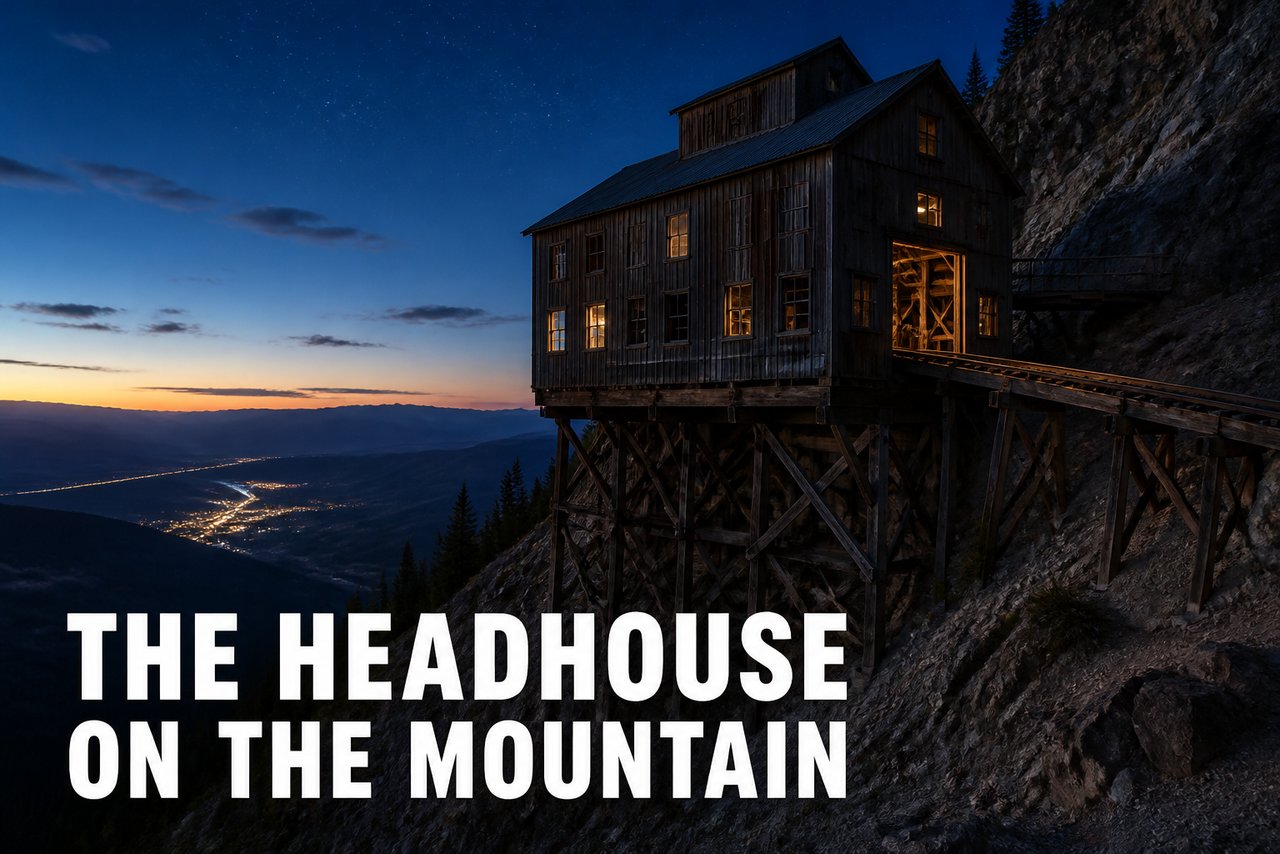
You can see it from the Mackay baseball field, from the highway, from practically anywhere in the valley: a dark wooden building perched impossibly high on the shoulder of the White Knob Mountains, straight up the face of the ridge. Locals call it the headhouse. It is the last surviving structure of the Mackay Mine Hill tramway - the aerial rope line that carried copper ore down from the mines for decades - and it has been standing up there, holding its ground against everything Idaho weather can throw at it, for a century.
How Ore Came Down the Mountain
The Mackay mines sat high on the mountain - the working levels were above 8,000 feet, cold country in every season. Getting the ore down was the whole economics of the operation: first by pack string, later by a small mining railroad that clawed up the mountain in 1901, and finally - the engineering triumph - by an aerial tramway completed in 1918 that replaced the railroad entirely. Buckets the size of bathtubs rode a mile-plus of steel cable from the mine openings down to the mill, gliding over terrain that would have swallowed a railroad budget.
The tramway worked the mountain through the 1920s and '30s, and the district's underground mines shipped on the order of three-quarters of a million tons of copper in their day. When the Empire mine finally closed in the late 1940s, the machinery went quiet for good. Most of the surface works came down in the decades after. The headhouse stayed.
The Drive Up
The Mackay Mine Hill Tour is a self-guided driving route that climbs from town up the old mine road - steep, narrow, and washboarded in spots, best done in a truck or SUV and never in a hurry. Interpretive signs mark the way: the mill foundations, the tramway pylons marching up the slope, the mine openings, and finally the headhouse itself, where the road ends and the view opens over the entire Big Lost River Valley.
Take the time to walk around it. The building was stabilized and repaired by local preservation groups and volunteers, who have kept it standing through wind, snow load, and simple gravity for more than a hundred years. Informational panels tell the stories of the men who worked the mountain - the tramway operators who rode the buckets down in the morning, the miners who spent entire winters at the tunnel openings above. It is a rugged little hike into exactly the kind of history that brochures skip and locals remember.
Why We Love It
Anyone can tour a mining museum. Not everyone can stand under a structure that has been part of the view from town for four generations, and feel how the whole valley's story - copper, hay, and stubbornness - runs through it. The headhouse is not on the way to anywhere anymore; it is simply at the top of its mountain, doing its long, slow job of remembering.
Go up in the late afternoon when the light turns the weathered wood gold, stay for the stars (there is a reason photographers haul tripods up this road), and think about the crews who built all of this without a single switchback and without complaining on record. Then drive down slow. The county plows it; the county also appreciates it.