Great Basin: An Island Range in the Sky, with Trees Older than Rome
Some parks you drive through on a scenic road and call it done. Great Basin National Park is not that park - it is the one you drive TO, down a Nevada valley that seems to be going nowhere, until a 13,000-foot mountain rises out of the sagebrush with glaciers, caves, and the oldest living trees on the planet stacked up its flanks. We planned two days. We should have planned four.
An Island in the Sky
The Great Basin is a region, not a single basin: the whole of the American Southwest where no river reaches the sea. Rain that falls here either sinks, evaporates, or sits in salt flats at the bottom of some valley. Across hundreds of thousands of square miles, the land repeats one pattern - long north-south mountain ranges separated by flat desert valleys - like waves frozen in stone.
In the middle of it all, the Snake Range rises like a mirage. Wheeler Peak, the crown of the park, tops out at 13,063 feet, and everything about it looks improbable: a glacier-carved summit and alpine lakes standing over one of the hottest, driest deserts on the continent. Ecologists call this an island in the sky - a temperate alpine world stranded above the sagebrush sea, home to plants and animals that could never survive the valley below. The park itself was established in 1986, but the heart of it, the Lehman Caves area, has been protected since 1922.
The Trees Older Than Rome
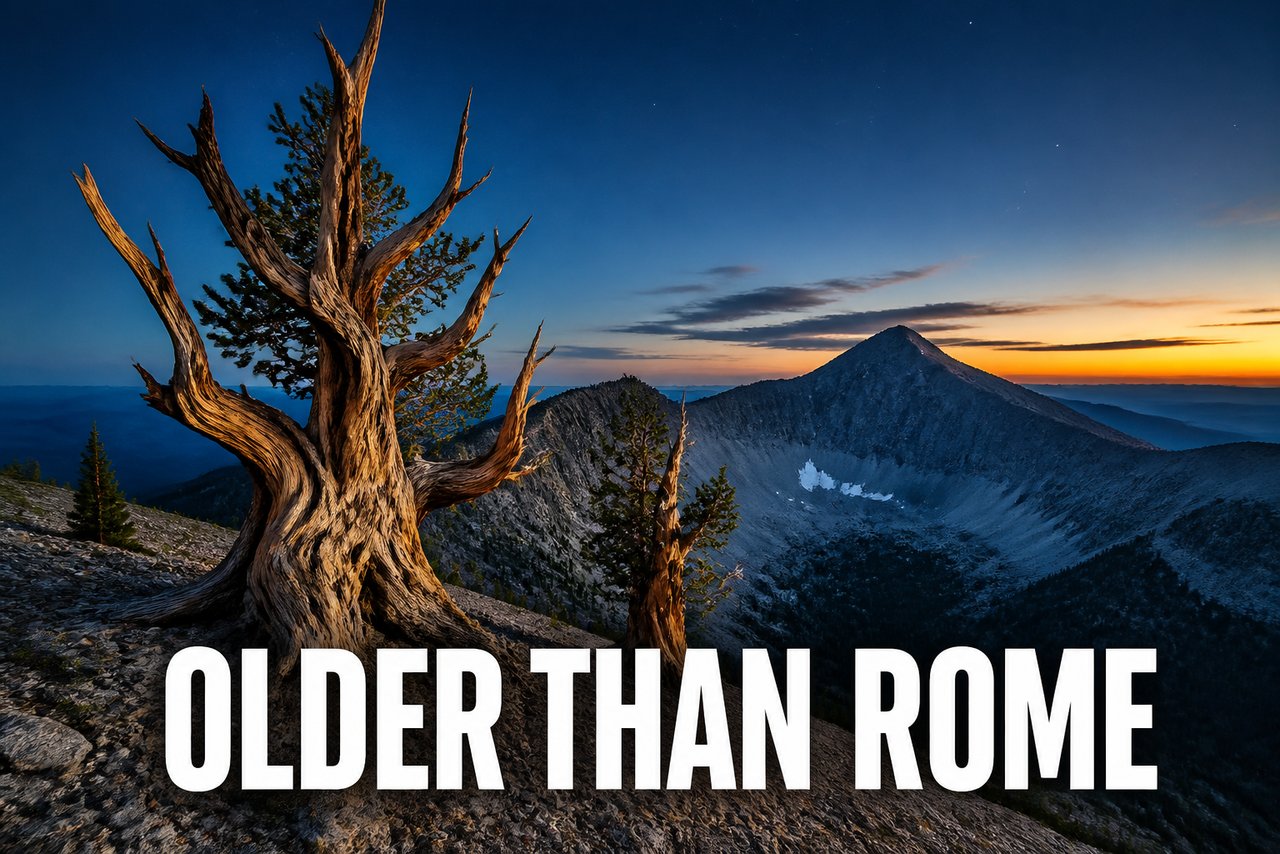
The park's most famous residents grow near treeline, in soil too thin and wind too fierce for anything else: Great Basin bristlecone pines. These gnarled, half-dead-looking survivors are among the oldest living things on Earth - individual trees here have been dated to more than 4,000 years old, which means some of them were seedlings before the Roman Republic existed. They survive by dying gracefully in pieces: one living strip of bark keeps a single limb alive while the rest of the tree weathers to wood as dense as stone.
The bristlecone grove on Wheeler Peak's shoulder is reached by a modest three-mile round-trip trail, and it is one of the great walks in the American West. Interpretive signs mark the way, but honestly, you will spend your time standing still, trying to imagine what a tree that has watched four thousand years of weather look like up close. There is a gnarled patriarch near the top of the trail that photographers line up for; take your turn and then just sit on the rocks for a while. That is the moment the park gives you.
Down Into Lehman Caves
A thousand feet below the summits, the park hides its second marvel. Lehman Caves is a single, beautifully decorated marble cave - one long, intricate passage system of rooms and galleries lined with the usual crowd of stalactites and stalagmites, and with something rarer: cave shields, those odd, two-plate formations of calcite that few caves anywhere produce in such numbers. The rock itself is what makes it strange. Marble, in a desert, in Nevada - the cave was dissolved out of limestone that heat and pressure deep in the earth turned to marble, and then the water came back through and carved it hollow.
Tours run year-round out of the visitor center near the park entrance, and you will want to book ahead in summer. Bring a jacket - the cave holds to around fifty degrees, whatever the desert is doing outside - and prepare to learn a new vocabulary word: helictites, the gravity-defying straws of calcite that seem to grow in every direction just to spite physics.
High Country and Dark Skies
Wheeler Peak Scenic Drive climbs from the desert floor to over 10,000 feet in twelve miles, switchbacking through life zones as if you were driving from Nevada to Canada: sagebrush to pinyon-juniper to mountain mahogany to spruce-fir, with trailheads for the high lakes dropping off along the way. Stella Lake, a glassy tarn below the peak, is the easiest payoff - an alpine mirror that photographs like it has an Instagram account.
And at night, the park flips the whole day around. Great Basin is a certified International Dark Sky Park, and its astronomy programs are famous: rangers with telescopes, Volunteer astronomers, and skies so dark that Saturn's rings and the cloud bands of Jupiter pop out at the eyepiece. We have camped in a lot of quiet corners of this country. This one owns the night.
Practical Notes for RVers
Plan on the town of Baker for last fuel and provisions, and note that there are no services inside the park beyond water and restrooms near the visitor center. The campground at the Wheeler Peak Scenic Drive's upper end handles small rigs; trailers longer than about 24 feet will want the lower campgrounds or sites in Baker, and honestly, the valley camping near the park is its own pleasure - 6,000-foot evenings, quiet, and the peak glowing pink over the sage at sunset. Fill your water, empty your tanks, and take the park's own advice: arrive with a full tank and no expectations of cell service. That combination still equals the best national park visit we have had in years.