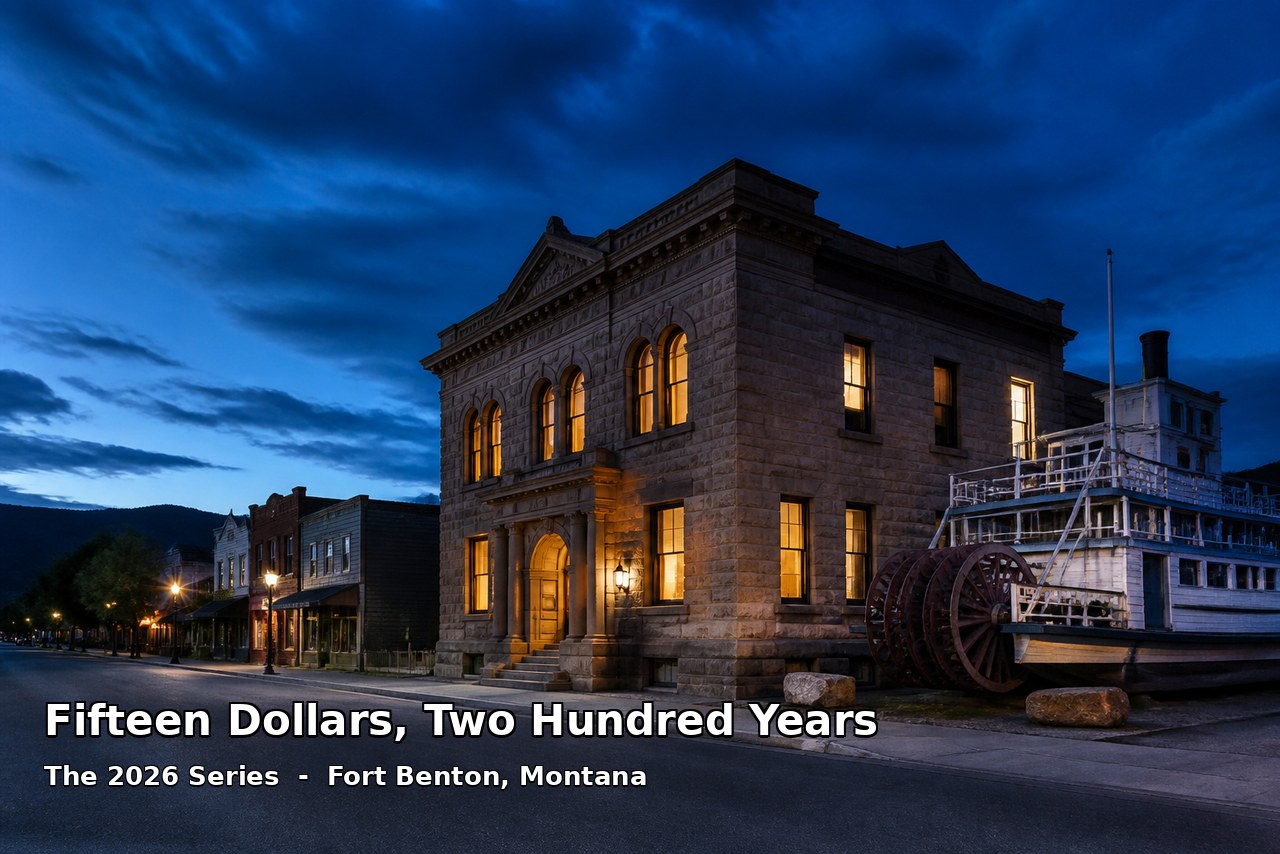
Fifteen Dollars, Two Hundred Years: The Museum of the Upper Missouri
The Fifteen-Dollar Door
Remember how our morning went: a dawn walk along the levee, the veterans memorial, the town coming awake around us. By the time we reached the door of the Museum of the Upper Missouri, the museums were open and Fort Benton was in motion. And that's where we made one of the best-spent decisions of the entire trip: fifteen dollars buys a pass to all three of the town's museums - the Museum of the Upper Missouri, Historic Old Fort Benton, and the state's Museum of the Northern Great Plains. We bought it. This post is about the first one; the other two get their own telling soon.
Fifteen dollars. Two hundred years of story. Let me tell you what's behind that door.
The Whole River, Behind Glass
The Museum of the Upper Missouri covers roughly the century from 1800 to 1900 - but honestly, that undersells it, because the story it tells doesn't start in 1800 and it doesn't end in 1900. The museum treats the history of this stretch of river the way it actually happened: the Indigenous nations who lived, traded, and traveled here for centuries before any of the written history began; the Lewis and Clark passage in 1805; the fur trade and the founding of the fort itself; the steamboat era that made this the World's Innermost Port; and then the long settling of the plains that followed.
And here's what struck us most: this museum tells all of it with objects. Real ones. The glass cases hold an outstanding arrowhead collection - centuries of knapped work, laid out in sequence so you can watch the craft evolve. Pottery collections from the river peoples. Photographs from the town's past, row after row of them, faces looking back at you from the 1880s and 1890s. And the crown jewels for river nuts like us: beautifully built models of the old steamboats that once lined this levee thirty-six boats a season, rigged out down to the paddle wheels and pilothouses.
There's something about a small-town museum with a deep collection. A big city museum shows you history. A place like this one lets you stand close enough to see the maker's fingerprints - on a pot, on a projectile point, on the tiny rigging of a steamboat built by someone's grandfather. The exhibits carry the area's story from the Indigenous peoples through Lewis and Clark, the steamship era, the Depression years, two World Wars, and right up to the present, all arranged in that unhurried, case-by-case way that invites you to lean in.
Depression, War, and the Long Now
Most river-town museums would be tempted to stop the story when the steamboats did. This one doesn't. The exhibits walk you straight through the twentieth century - the homestead boom and bust, the Depression that hollowed out the plains, the young men of Chouteau County leaving for World War I and World War II, and the town's slow, stubborn story right up to the present day. Standing in front of those cases, you realize what the museum actually is: not a display of the past but a portrait of a place, painted by the people who stayed.
By the time you come out the far end, you've walked two centuries in an hour or two, and you understand Fort Benton differently. That quiet town we'd walked through at dawn? It wasn't quiet because it was empty of history. It was quiet because the history is at rest here, well kept, and well told.
The People Behind the Counter
We have to say this plainly, because it's true and because it shaped the whole visit: some of the nicest people you will ever meet staff these museums. They're locals - docents and volunteers and friends of the museum who know the collection because it's their own town's collection. Ask them a question about an arrowhead or a steamboat model and you get the kind of answer no exhibit label can print: the story behind the story, who donated it, why it matters. We could have stayed all day just talking.
That's the thing about museum passes in a town of 1,500 people. The $15 isn't buying admission. It's buying a guided handshake with a community.
If You Go
The Museum of the Upper Missouri sits in Fort Benton, about 40 minutes northeast of Great Falls. It's one of three museums covered by the town's combined pass (currently $15 for adults) along with Historic Old Fort Benton and the state's Museum of the Northern Great Plains - which also includes Homestead Village and the Hornaday Smithsonian Buffalo Gallery. Summer hours are typically 9 to 5; the museums open mid-morning in the shoulder seasons, so check ahead. Give the Museum of the Upper Missouri an hour or two, and budget a full day if you're doing all three on the pass - which you should, because the math is outrageous in your favor.
For RVers: pair this with the river walk we described last time. Morning on the levee, museums after ten. It's a perfect slow-history day, and the town is flat, friendly, and easy to walk from anywhere you can park a rig.
Last Light
We came to Fort Benton for the river, honestly - the steamboats, the levee, the falls upstream. We left having fallen for the museums, and specifically for this one: two hundred years of river country, arranged behind glass by people who love it, for fifteen dollars and the price of saying good morning. If every small town in America had a Museum of the Upper Missouri, the past would be in very good hands everywhere.